
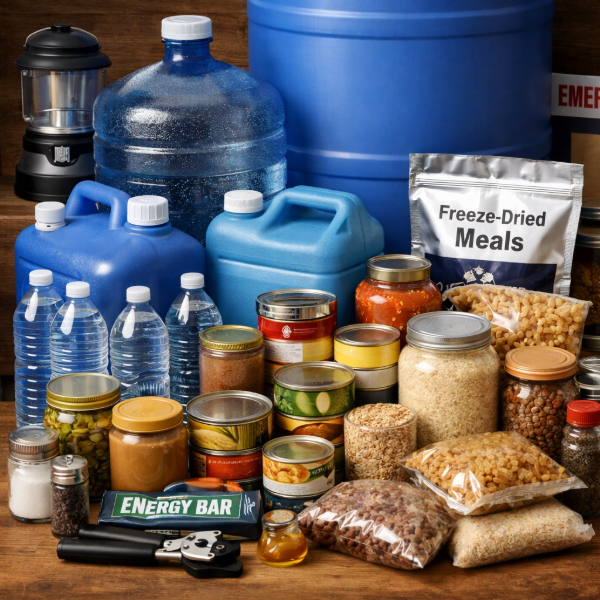
Learn how to safely store water and food for long-term home emergency preparedness.
Why Emergency Water & Food Matter
Unexpected events—storms, infrastructure failures, boil-water advisories, power outages—can temporarily disrupt access to clean water and groceries. Building a small home reserve helps you maintain independence and peace of mind without panic or excess.
Emergency Water Storage
Water is the most essential resource during an emergency. The general recommendation is:
1 gallon (4 liters) per person per day
This covers both drinking and basic hygiene. For a standard 3-day reserve, that means around 12 liters per person. A two-week reserve is ideal for longer disruptions.
Best Water Storage Containers
Use containers that are:
✔ BPA-free
✔ Food-grade
✔ Designed for long-term storage
Examples include:
- Sealed water storage jugs (3–7 gallons)
- Water bricks
- 55-gallon barrels
- Commercial bottled water
Avoid containers that previously stored juice or milk—residue encourages bacterial growth.
Treatment & Rotation
If using tap water:
- Chlorinated municipal water usually stores safely for 6–12 months
- Well water may require filtration or treatment first
You can extend safety by adding water purification tablets, or rotating the supply every 6 months.
Emergency Food Reserves
Food stores don’t need to be expensive or exotic. Start with foods you already eat and enjoy.
Recommended Shelf-Stable Foods
- Canned vegetables, meat, and fish
- Rice, pasta, oats
- Dried beans or lentils
- Nut butters
- Shelf-stable milk or powdered milk
- Energy bars
- Honey (indefinite shelf life)
- Freeze-dried meals (longest storage life)
Storage Tips
To extend shelf life:
✔ Keep food in a cool, dry, and dark environment
✔ Use airtight containers or Mylar bags with oxygen absorbers for bulk dry goods
✔ Label packaging with dates for rotation
Many pantry staples last 1–5 years; freeze-dried options can reach 25 years.
Rotation Without Waste
Avoid building reserves you never use. Follow the simple method:
Store what you eat, eat what you store
This prevents expiration, reduces waste, and saves money.
Don’t Forget These Extras
Small additions can make emergency meals much easier:
- Manual can opener
- Seasonings and spices
- Vitamins
- Baby or pet food (if applicable)
- Comfort foods—boost morale during stressful times
Balanced Preparedness Without Fear
Building a modest reserve of water and food isn’t about panic—it’s about reducing dependence during everyday disruptions and helping your family stay comfortable and confident.
Call-to-Action
Start small: add one week of water and staple foods to your home. Over time, you can expand to two weeks or more without stress or excess.