
Introduction
A heatwave emergency preparedness guide is essential for anyone facing increasingly frequent and intense extreme heat events. Heatwaves can cause dehydration, heat exhaustion, and even life-threatening heatstroke. Whether you’re at home, traveling, or living off-grid, being prepared can make the difference between comfort and danger.
In this guide, you’ll learn practical steps to protect yourself, your family, and your home during extreme heat conditions.
What Is a Heatwave?
A heatwave is a prolonged period of excessively hot weather, often combined with high humidity. These conditions can overwhelm the body’s ability to cool itself, leading to serious health risks.
Why Heatwave Preparedness Matters
Extreme heat is one of the deadliest weather events worldwide. Proper preparation helps you:
- Prevent heat-related illnesses
- Maintain hydration and energy
- Protect vulnerable individuals (children, seniors, pets)
- Keep your home livable without over-reliance on power
Essential Heatwave Emergency Supplies
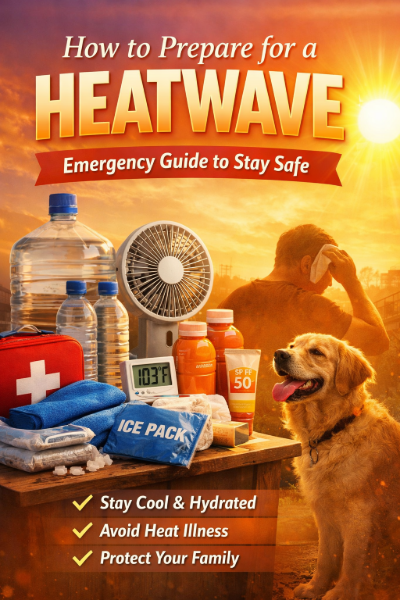
Prepare a heatwave kit in advance. Include:
- Water: At least 4 liters per person per day
- Electrolyte drinks or powders
- Cooling towels or bandanas
- Battery-powered or solar fans
- Ice packs or reusable cold compresses
- Light, breathable clothing
- Sunscreen (SPF 30+)
- First aid kit
- Backup power source (power bank or solar charger)
How to Prepare Your Home for a Heatwave
1. Block Heat from Entering
- Close blinds and curtains during peak sun hours
- Use reflective window covers or thermal curtains
- Seal gaps around doors and windows
2. Improve Air Circulation
- Use fans strategically (cross-ventilation)
- Open windows at night when temperatures drop
- Consider attic ventilation if applicable
3. Create a Cooling Room
Designate one room as your “cool zone”:
- Use fans or portable AC
- Stay in this room during peak heat hours
- Keep doors closed to maintain lower temperatures
Personal Safety Tips During Extreme Heat
- Drink water regularly (don’t wait until you’re thirsty)
- Avoid outdoor activity during peak heat (11 AM – 4 PM)
- Wear light-colored, loose-fitting clothing
- Take cool showers or baths
- Rest frequently if working outdoors
Recognizing Heat-Related Illnesses
Heat Exhaustion Symptoms
- Heavy sweating
- Weakness
- Dizziness
- Nausea
Heatstroke Symptoms (Medical Emergency)
- Body temperature above 40°C (104°F)
- Confusion or unconsciousness
- Hot, dry skin
What to Do:
- Move the person to a cool place immediately
- Apply cool water or ice packs
- Seek emergency medical help
Heatwave Preparedness for Vulnerable Groups
Seniors
Older adults are more sensitive to heat. Ensure:
- Regular hydration
- Access to cooling devices
- Frequent check-ins
Children
- Never leave children in cars
- Encourage frequent water breaks
- Dress them in breathable clothing
Pets
- Provide constant fresh water
- Avoid walking pets on hot pavement
- Never leave pets in vehicles
Power Outage During a Heatwave
Heatwaves often strain electrical grids. Be ready:
- Use battery-powered fans
- Keep a cooler with ice
- Stay on lower floors (heat rises)
- Visit public cooling centers if necessary
Long-Term Heatwave Preparedness Strategies
- Install energy-efficient cooling systems
- Add insulation and reflective roofing
- Plant shade trees around your home
- Invest in solar power solutions
Final Thoughts
A well-planned heatwave emergency preparedness guide ensures you’re ready when extreme temperatures hit. Preparation isn’t just about comfort, it’s about survival. By taking simple steps today, you can protect yourself and your loved ones from the dangers of extreme heat.