
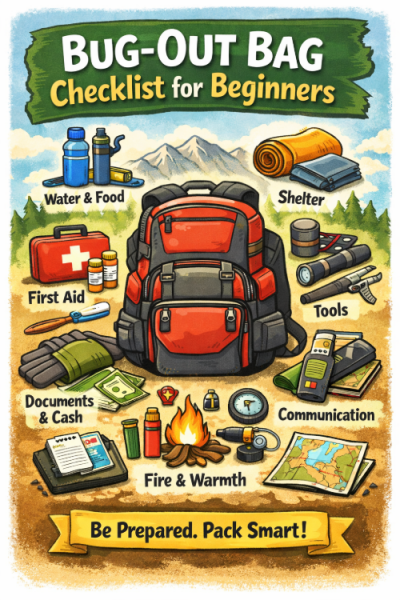
Bug-Out Bag Checklist for Beginners: What You Really Need
A bug-out bag (BOB) is a portable emergency kit designed to help you survive for at least 72 hours if you need to leave your home quickly. For beginners, building a bug-out bag can feel overwhelming. The key is to focus on essentials—not gadgets.
This simple checklist will help you build a practical, realistic bug-out bag without overpacking or wasting money.
What Is a Bug-Out Bag?
A bug-out bag is meant for short-term survival during emergencies such as natural disasters, power grid failures, wildfires, or evacuations. It should support your basic needs: water, food, shelter, warmth, first aid, and communication.
Your bag should be lightweight, organized, and tailored to your climate and personal needs.
Bug-Out Bag Checklist for Beginners
1. Water & Hydration
Water is your top priority.
- Water bottles or collapsible containers (2–3 liters per person)
- Water purification tablets or drops
- Portable water filter (beginner-friendly models preferred)
💡 Tip: Don’t rely on bottled water alone—have a way to purify more.
2. Food & Nutrition
Choose food that requires little or no cooking.
- Ready-to-eat meals (MREs or dehydrated meals)
- Energy bars or protein bars
- Nuts, trail mix, or dried fruit
- Plastic utensils
- Small stove or heat source (optional for beginners)
💡 Avoid heavy cans and complicated cooking setups.
3. Clothing & Weather Protection
Pack for the worst weather, not the best.
- Extra socks (very important)
- Weather-appropriate clothing
- Lightweight gloves and hat
- Compact rain poncho or jacket
4. Shelter & Warmth
Even basic shelter can save your life.
- Emergency bivy or space blanket
- Lightweight tarp or emergency shelter
- Paracord (25–50 feet)
5. First Aid & Personal Care
Start simple and build over time.
- Basic first aid kit
- Personal medications
- Pain relievers
- Hand sanitizer
- Wet wipes
- Toothbrush and toothpaste
6. Tools & Essentials
These items help you solve problems.
- Multi-tool or fixed-blade knife
- Flashlight or headlamp (LED preferred)
- Extra batteries or rechargeable power bank
- Duct tape (wrapped flat)
- Whistle
7. Fire & Light
Fire is warmth, comfort, and a survival tool.
- Waterproof matches
- Lighter
- Fire starter (cotton + petroleum jelly or commercial)
8. Communication & Navigation
Stay informed and oriented.
- Emergency radio (hand-crank or battery-powered)
- Paper map of your area
- Notebook and pencil
9. Documents & Cash
Keep these protected.
- Copies of ID and insurance documents
- Emergency contact list
- Small amount of cash
- Waterproof document pouch
10. Comfort & Mental Resilience (Often Overlooked)
Morale matters.
- Gloves
- Earplugs
- Simple comfort item (photo, small book, cards)
Common Beginner Mistakes to Avoid
- Overpacking heavy gear
- Buying military-style equipment unnecessarily
- Ignoring climate and season
- Forgetting to test the bag
- Packing items you don’t know how to use
How Heavy Should a Bug-Out Bag Be?
For beginners, aim for 15–25 pounds (7–11 kg). A lighter bag is better than an overbuilt one you can’t carry.
Final Thoughts
Your first bug-out bag doesn’t need to be perfect. Start simple, test it, and improve it over time. The best bug-out bag is one that matches your reality, not someone else’s extreme survival scenario.
Preparedness is about calm, practical readiness—not fear.