
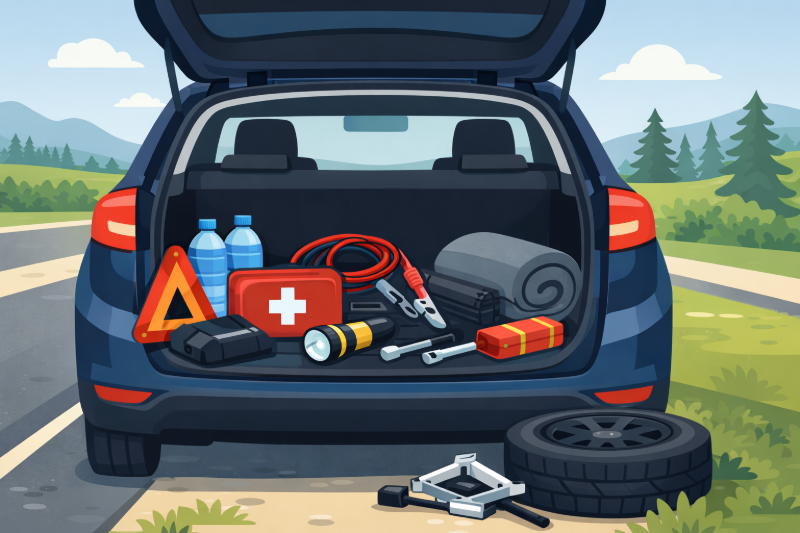
When most people think about emergencies, they imagine natural disasters or power outages at home. But one of the most common places to experience a crisis is on the road. A flat tire, breakdown, sudden storm, or traffic shutdown can quickly turn into a stressful situation—especially if you’re far from services or traveling during extreme weather. A well-prepared emergency car kit can make all the difference.
Why an Emergency Car Kit Matters
Vehicles today are reliable, but life on the road is unpredictable. Delays due to accidents, winter storms, extreme heat, wildfires, or highway closures can leave drivers stuck for hours. For road trips, rural routes, or long commutes, having basic supplies increases comfort, safety, and peace of mind.
Core Emergency Car Kit (All Seasons)
These items apply year-round and should remain in the vehicle:
Safety & Roadside Tools
- Jumper cables or battery booster pack
- Tire repair kit or tire sealant
- Spare tire + jack + lug wrench
- Road flares or reflective triangles
- Multi-tool and basic toolkit
- Tow strap
- Work gloves
- Flashlight or headlamp + extra batteries
Vehicle Essentials
- Owner’s manual
- Car charger or USB power bank
- Windshield washer fluid
- Duct tape + zip ties
- Fire extinguisher (rated for vehicle use)
Medical & Personal Care
- First aid kit
- Pain relievers
- Personal medications (if needed)
- Tissues or wet wipes
- Emergency blanket (space blanket)
Food, Water & Comfort
- Drinking water (1–2 liters minimum)
- Shelf-stable snacks (granola, protein bars, nuts)
- Reusable bottle or cup
- Small trash bags
Communication & Information
- Paper maps (in case GPS fails)
- Notebook + pen
- Emergency contact list
- Insurance & roadside assistance info
Extra Supplies for Winter Driving (Road Trips + Snow Conditions)
Winter travel introduces additional risks including freezing temperatures, snow buildup, and reduced rescue access. Consider adding:
- Warm blankets or sleeping bag
- Hand + foot warmers
- Traction aids (sand, cat litter, traction boards, or tire socks)
- Windshield scraper and snow brush
- Small folding shovel
- Chemical heat packs
- Extra gloves, hat, and dry socks
- Waterproof boots
- Thermos with warm drink (for long trips)
- Candles in a metal tin (heat source if stranded)
- Emergency light sticks (work even in extreme cold)
Winter goal: prevent hypothermia, maintain visibility, and keep the vehicle moveable.
Extra Supplies for Summer Heat & Heatwaves (Road Trips + Hot Climates)
Heat emergencies can be just as dangerous, especially in traffic shutdowns or desert travel. For summer conditions, add:
- Additional drinking water (2–4 liters per person)
- Electrolyte packets or sports drinks
- Cooling towel or bandana
- Portable fan (battery-powered or USB)
- Sunshade for windshield
- Extra sunscreen
- Spare power bank for phones (heat kills batteries)
- Insulated cooler bag
- Light, long-sleeve clothing to prevent sunburn
Heat goal: prevent dehydration, overheating, and electronic failure.
Storage & Maintenance Tips
Keeping a car kit useful means maintaining it:
- Rotate water every 6–12 months
- Replace expired food and medications
- Test flashlights and battery packs
- Refresh first-aid supplies annually
- Adjust kit per season (winter vs. summer)
- Keep critical items accessible—not buried
Extra Planning Tips for Road Trips
Beyond gear, smart planning reduces risks:
- Check weather + road conditions before departure
- Download offline maps for areas with weak signal
- Keep your gas tank above 1/2 in rural areas
- Share your route and expected arrival time
- Know emergency numbers for the region
Conclusion
A car emergency kit doesn’t need to be complicated or expensive—many items are things people already own. Start with basic safety gear and build up depending on season, climate, and travel distance. Whether it’s winter snowstorms, summer heatwaves, or a long highway road trip, the goal is the same: stay safe, stay comfortable, and stay prepared.