
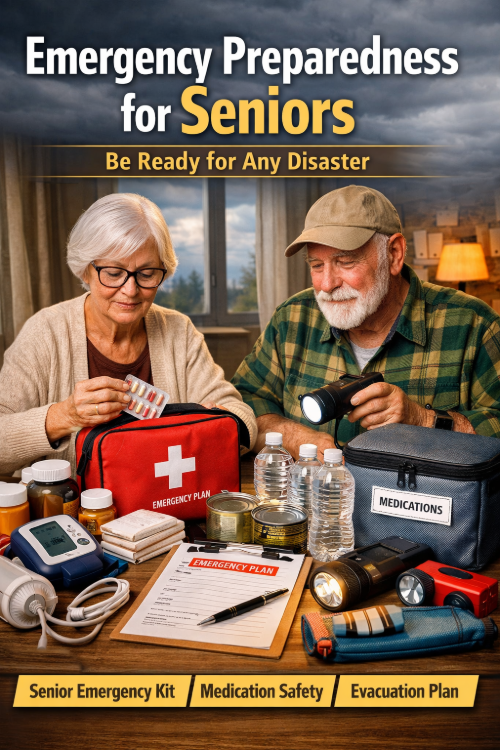
When it comes to emergency preparedness, seniors face unique challenges. Limited mobility, medical needs, medication dependence, and social isolation can make disasters especially dangerous for older adults. Whether it’s a hurricane, wildfire, winter storm, or power outage, being prepared can make the difference between safety and serious risk.
This guide will help seniors — and their families — build a realistic, practical emergency preparedness plan.
Why Emergency Preparedness Is Critical for Seniors
Older adults are often more vulnerable during emergencies because they may:
- Rely on daily medications
- Use medical devices requiring electricity
- Have reduced mobility or balance
- Live alone
- Have hearing or vision impairments
Planning ahead reduces stress, confusion, and danger when every minute counts.
1. Build a Senior-Specific Emergency Kit
A standard survival kit is not enough. Seniors need customized supplies.
Essential Items:
- 7–14 day supply of medications
- Copies of prescriptions
- List of medical conditions and allergies
- Extra eyeglasses or hearing aid batteries
- Mobility aids (walker, cane, wheelchair repair kit)
- Flashlight with extra batteries
- Portable phone charger or power bank
- First aid kit
- Non-perishable food and bottled water (at least 1 gallon per person per day)
Extra for Medical Needs:
If using oxygen, CPAP, or other electric medical equipment, plan for backup power options.
2. Create a Clear Emergency Plan
A simple, written plan is essential.
Include:
- Emergency contacts (family, neighbors, doctor)
- Meeting points if evacuation is required
- Local emergency numbers
- Transportation arrangements
- Shelter locations
Keep printed copies accessible.
3. Prepare for Power Outages
Power outages are especially dangerous for seniors who rely on medical equipment or refrigerated medications.
Preparation tips:
- Backup battery systems
- Generator (if safe and properly ventilated)
- Insulated cooler for medications
- Battery-powered lights instead of candles
4. Stay Connected
Isolation increases risk. Seniors should:
- Register with local emergency assistance programs
- Inform neighbors about medical needs
- Join community preparedness groups
- Keep a charged cell phone nearby
Family members should check in regularly during emergencies.
5. Practice the Plan
Preparedness is not a one-time event.
- Review emergency supplies every 6 months
- Replace expired medications and food
- Practice evacuation routes
- Update contact lists
Regular practice builds confidence and reduces panic.
6. Special Considerations for Caregivers
Caregivers should:
- Keep digital and printed medical records
- Know medication schedules
- Have power backup solutions
- Prepare a “go bag” for quick evacuation
Communication is key. Everyone involved should understand the plan.
Final Thoughts
Emergencies are unpredictable — preparation is not.
By taking proactive steps today, seniors can protect their health, independence, and safety during disasters. Preparedness provides peace of mind not just for older adults, but for their families as well.
The best time to prepare is before an emergency happens.