
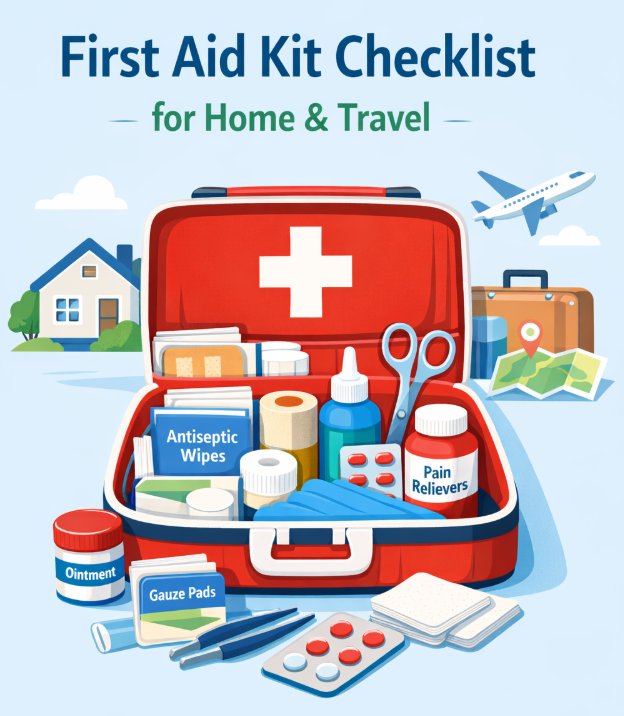
A well-stocked first aid kit is essential for handling minor injuries, sudden illnesses, and unexpected emergencies. Whether you’re at home or on the road, being prepared can make a critical difference. This checklist will help you build a reliable first aid kit for both everyday living and travel.
🏠 First Aid Kit Checklist for Home
Your home kit should cover common household injuries and medical needs:
Basic Supplies
- Adhesive bandages (various sizes)
- Sterile gauze pads and rolls
- Medical tape
- Antiseptic wipes
- Antibiotic ointment
- Cotton balls or swabs
Tools
- Scissors
- Tweezers
- Digital thermometer
- Disposable gloves (non-latex)
- CPR face shield
Medications
- Pain relievers (acetaminophen or ibuprofen)
- Antihistamines (for allergies)
- Anti-diarrheal medication
- Hydrocortisone cream
- Burn relief gel
Other Essentials
- Instant cold pack
- Eye wash solution
- First aid manual or instruction card
Where to Buy First Aid Kits
American Red Cross – First Aid Supplies
FLARESYN – Tactical First Aid Solutions
🚗 First Aid Kit Checklist for Travel
A travel first aid kit should be compact and easy to carry while covering essential needs:
- Adhesive bandages
- Antiseptic wipes
- Pain relievers
- Motion sickness tablets
- Blister treatment pads
- Tweezers
- Disposable gloves
- Personal medications
- Emergency contact list
💡 Tip: When flying, ensure all liquids and tools comply with airline regulations.
👨👩👧👦 Customize Your First Aid Kit
Consider adding:
- Prescription medications
- EpiPen (if required)
- Infant or child-specific items
- Extra supplies for chronic conditions
✅ Final Preparedness Tips
- Check your kit every 6 months
- Replace expired medications
- Store kits in easy-to-access locations
- Keep a smaller kit in your car or luggage
Being prepared starts with the right supplies. This first aid kit checklist ensures you’re ready—at home or wherever life takes you.