
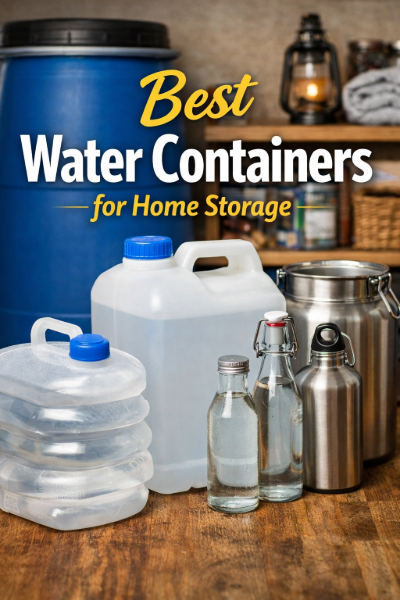
Access to clean water is one of the most critical elements of emergency preparedness. Whether you’re planning for natural disasters, supply disruptions, or long-term self-reliance, choosing the best water containers for home storage can make a major difference in safety and convenience.
In this guide, you’ll learn which types of containers work best, how to store water properly, and what to avoid.
Why Choosing the Right Water Container Matters
Not all containers are safe or suitable for long-term water storage. The right option will:
- Keep water safe from contamination
- Prevent chemical leaching
- Be durable and reusable
- Allow for easy transport and access
Poor choices can lead to bacterial growth, bad taste, or even unsafe drinking water.
1. Food-Grade Plastic Water Containers
Best for: Most households, beginners, and emergency preparedness
Food-grade plastic containers are the most popular option for home water storage. They are lightweight, affordable, and specifically designed to safely hold drinking water.
Key Features:
- Made from HDPE (High-Density Polyethylene)
- BPA-free and safe for long-term use
- Available in sizes from 1 gallon to 7+ gallons
Pros:
- Affordable and widely available
- Easy to carry and stack
- Designed for potable water
Cons:
- Can degrade over many years
- Not ideal for extreme long-term storage (10+ years)
👉 Recommended for: emergency kits, short- to medium-term storage
2. Water Storage Barrels (Large Capacity)
Best for: Long-term preparedness and family storage
Water barrels typically hold 30 to 55 gallons and are ideal for storing large volumes of water at home.
Key Features:
- High-capacity storage
- Often made from food-grade plastic
- Can be paired with pumps or spigots
Pros:
- Excellent for long-term storage
- Cost-effective per gallon
- Ideal for basements or garages
Cons:
- Heavy and hard to move once filled
- Requires space and proper setup
👉 Recommended for: long-term emergency water reserves
3. Collapsible Water Containers
Best for: Space-saving and temporary storage
These containers are made from flexible materials and can be folded when empty.
Key Features:
- Lightweight and portable
- Compact storage when not in use
Pros:
- Great for small spaces
- Easy to transport
- Budget-friendly
Cons:
- Less durable than rigid containers
- Not ideal for long-term storage
👉 Recommended for: backup storage, travel, or bug-out kits
4. Glass Water Containers
Best for: Chemical-free storage and taste purity
Glass is one of the safest materials for water storage since it doesn’t leach chemicals.
Key Features:
- Non-reactive material
- Excellent for maintaining water taste
Pros:
- No chemical contamination
- Long lifespan if handled carefully
Cons:
- Fragile and breakable
- Heavy and less practical for large volumes
👉 Recommended for: small-scale storage or daily use
5. Stainless Steel Containers
Best for: Durability and portability
Stainless steel containers are highly durable and resistant to damage.
Key Features:
- Rust-resistant
- Long-lasting material
Pros:
- Extremely durable
- Safe and non-toxic
- Good for both storage and transport
Cons:
- More expensive
- Limited large-capacity options
👉 Recommended for: portable storage and long-term reliability
How Much Water Should You Store?
A general rule is:
- 1 gallon (3.8 liters) per person per day
- Store at least 3 to 7 days of water
- Ideally aim for 2+ weeks for true preparedness
Best Practices for Safe Water Storage
To ensure your water remains safe:
- Use food-grade containers only
- Store in a cool, dark place
- Keep away from chemicals and gasoline
- Label containers with the date
- Rotate water every 6–12 months
Common Mistakes to Avoid
- ❌ Using non-food-grade plastic containers
- ❌ Storing water in sunlight
- ❌ Forgetting to rotate stored water
- ❌ Overlooking container cleanliness
Final Thoughts
Choosing the best types of water containers for home storage is a foundational step in emergency preparedness. For most households, a combination of food-grade plastic containers and large storage barrels offers the best balance between cost, safety, and convenience.
Start small, build your supply gradually, and make water storage a priority in your preparedness plan.