
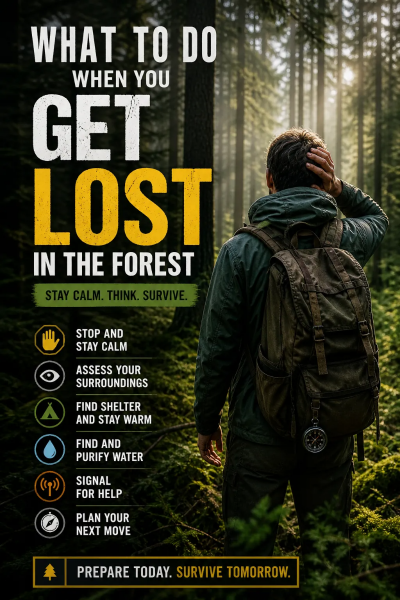
Getting lost in the forest can happen faster than most people expect. A wrong turn, poor visibility, or even a dead phone battery can quickly turn a simple hike into a dangerous situation. Knowing how to react calmly and effectively can make the difference between a minor inconvenience and a life-threatening emergency.
This guide will walk you through exactly what to do if you find yourself lost in the wilderness.
1. Stop and Control Panic
The first and most important step is simple: STOP.
A widely used survival acronym is:
- S – Stop
- T – Think
- O – Observe
- P – Plan
Panic leads to poor decisions, wasted energy, and getting even more lost. Take a few deep breaths, sit down, and give yourself a moment to regain control.
2. Stay Where You Are (Most of the Time)
Your instinct might be to keep moving, but that’s often a mistake.
If people know your general location, staying put increases your chances of being found. Wandering aimlessly makes search efforts much harder.
Exceptions:
- You are in immediate danger (flood zone, wildfire, unstable terrain)
- You can clearly identify a safe, nearby landmark (road, river, trail)
3. Assess Your Situation
Take inventory of what you have:
- Water supply
- Food
- Clothing layers
- Tools (knife, lighter, compass, phone)
- Daylight remaining
Also observe your surroundings:
- Weather conditions
- Terrain
- Nearby resources (water, shelter materials)
4. Signal for Help
Making yourself visible and noticeable is critical.
Visual Signals:
- Bright clothing or gear
- Build large symbols on the ground (SOS, arrows)
- Use reflective objects (mirror, phone screen)
Audible Signals:
- Whistle (3 blasts = distress signal)
- Yelling at intervals (don’t exhaust yourself)
Fire Signals:
- Smoke during the day
- Fire at night for visibility and warmth
5. Find or Build Shelter
Exposure is one of the biggest dangers in the wild.
Look for:
- Natural shelters (rock overhangs, dense trees)
- Dry, elevated ground
Or build a simple shelter using:
- Branches
- Leaves
- Moss
Focus on staying:
- Dry
- Warm
- Protected from wind
6. Secure Water First
You can survive days without food, but not without water.
Look for:
- Streams or rivers (follow downhill terrain)
- Rainwater collection
- Morning dew (cloth collection)
If possible, purify water:
- Boiling (best method)
- Filtration
- Purification tablets
7. Ration Food (But Don’t Panic About It)
Food is less urgent than water and shelter.
- Eat small amounts
- Avoid unfamiliar plants unless you are trained
- Conserve energy instead of hunting
8. Use Navigation Only If You’re Confident
If you decide to move:
- Follow a consistent direction
- Avoid walking in circles (use landmarks)
- Downhill often leads to water or civilization
- Rivers can guide you—but be cautious of hazards
Without a map or compass, random movement is risky.
9. Stay Warm and Dry
Hypothermia can occur even in mild temperatures.
- Layer clothing
- Stay dry at all costs
- Use insulation (leaves, pine needles)
- Keep a fire going if possible
10. Prepare for Nightfall
Night brings additional risks:
- Reduced visibility
- Temperature drops
- Increased disorientation
Before dark:
- Build or improve your shelter
- Gather firewood
- Prepare signals
Final Thoughts
Getting lost in the forest is a serious situation—but it’s survivable with the right mindset and actions.
Remember:
- Stay calm
- Stay visible
- Prioritize shelter and water
- Avoid unnecessary movement
Preparation is your best defense. Always tell someone your route, carry basic survival gear, and respect the wilderness.